
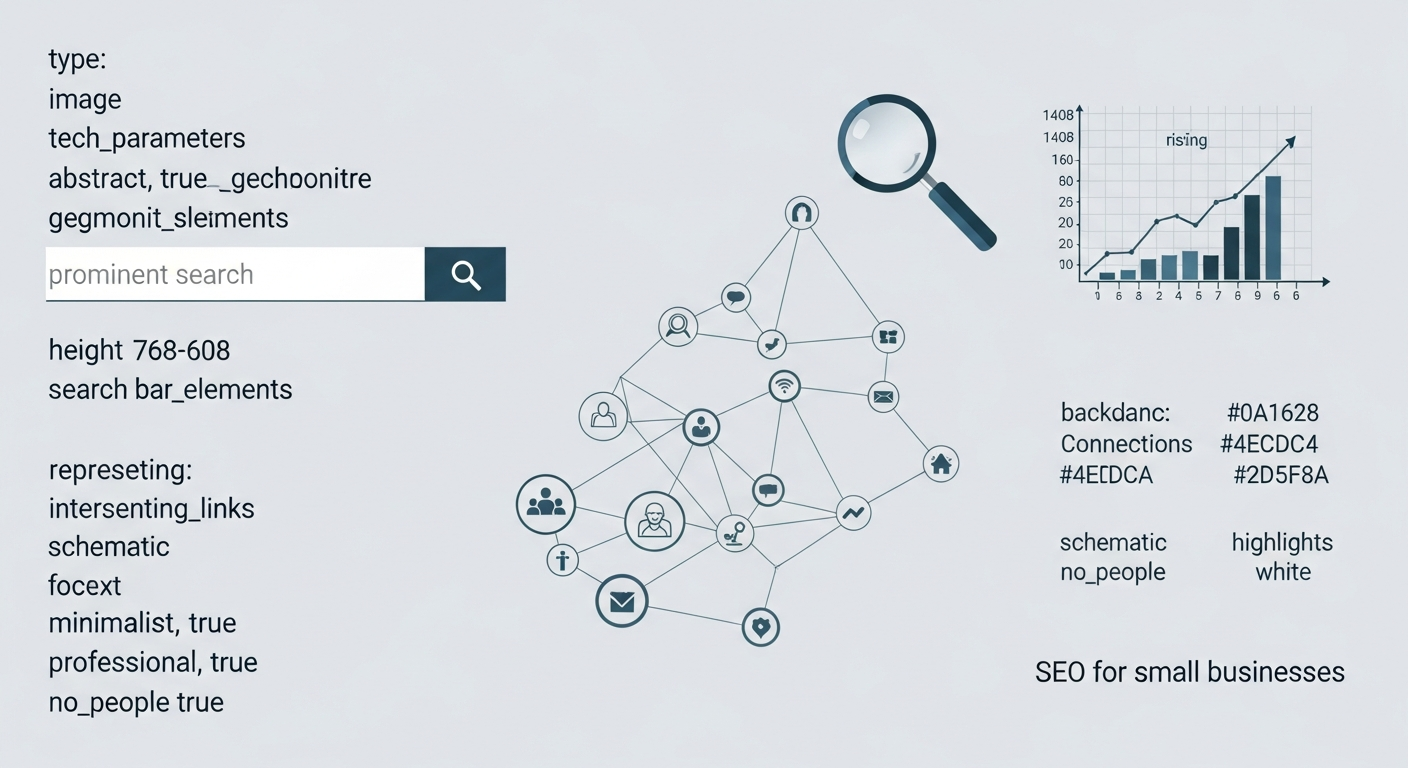
In 2026, 93% of online experiences begin with a search engine. For a Belgian SME, failing to appear in the top Google results is akin to shutting your shopfront on a busy high street. Yet many Walloon, Brussels and Flemish businesses still underestimate the potential of organic search. This guide provides a concrete methodology, tailored to the realities of the Belgian market, to transform your online visibility into a sustainable growth lever.
Why SEO is essential for Belgian SMEs in 2026
Belgian consumer behaviour has changed profoundly. According to Statbel, 87% of Belgians use the internet daily. Before contacting a supplier, a B2B buyer carries out an average of 12 online searches. In B2C, the majority of local purchases begin with a Google query such as “near me” or the local-language equivalent.
SEO offers a decisive advantage over paid advertising: it generates qualified traffic over the long term, with no cost per click. A well-ranked article continues to attract visitors for months, even years. For an SME with a limited marketing budget, it is an investment with cumulative returns.
Belgium also presents a unique characteristic in Europe: a trilingual market. SMEs that optimise their content in French, Dutch and sometimes German capture search volume that their monolingual competitors ignore entirely. This is a structural opportunity for agile businesses.
Finally, the rise of AI-powered answer engines such as ChatGPT, Perplexity and Google AI Overview is changing the game. Businesses whose content is structured and factual are cited as a priority by these systems. Failing to adapt means becoming invisible on two fronts simultaneously.
The 5 pillars of SEO for SMEs
Effective organic search rests on five foundations. Neglecting any one of them weakens your entire strategy. Here is how to approach each pragmatically.
1. Technical SEO
Technical SEO covers everything that enables search engines to crawl, index and understand your site. It is the invisible yet indispensable foundation of your visibility.
Priority elements for a Belgian SME:
- Loading speed: Google recommends a loading time under 2.5 seconds (Core Web Vital LCP). A slow site loses 53% of its mobile visitors. Host your site on a European server to reduce latency.
- Mobile-first: in Belgium, over 65% of web traffic comes from mobile devices. Google indexes the mobile version of your site first. Responsive design is no longer optional.
- HTTPS and SSL certificate: essential for user trust and search ranking. Browsers now flag unsecured sites with warnings.
- XML sitemap and robots.txt: these files guide indexing bots. Check them regularly via Google Search Console.
- Structured data (schema.org): these enable rich results (stars, FAQs, opening hours). Local SMEs that implement them achieve a click-through rate 30% higher.
An annual technical audit is recommended. Tools such as Screaming Frog, Ahrefs or Google Search Console allow you to quickly identify critical issues.
2. Optimised content
Content remains the primary fuel of SEO. In 2026, quality takes clear precedence over quantity. Google values content that demonstrates expertise, experience, authoritativeness and trustworthiness (E-E-A-T criteria).
Content strategy for a Belgian SME:
- Localised keyword research: target expressions specific to the Belgian market. “Accountant Namur” or “solar panel installer Walloon Brabant” face less competition than generic terms.
- In-depth articles (1,500 to 2,500 words): long-form, structured content ranks better for informational queries. Publish one to two articles per month rather than five rushed pieces.
- Optimised service pages: each service should have its own page with a unique H1 title, an engaging meta description and detailed content of at least 800 words.
- Structured FAQs: answer your clients’ frequently asked questions. This content is often pulled directly into Google results and by AI engines.
Duplicate content must be strictly avoided. Every page should deliver unique value. In a multilingual Belgian context, translate and adapt your content rather than duplicating it word for word.
3. Local SEO
For an SME serving a local clientele, local SEO represents the most cost-effective lever. It allows you to appear in Google’s “Local Pack” — those three map-based results that capture over 40% of clicks on local searches.
Priority actions:
- Complete and up-to-date Google Business Profile: name, address, telephone, opening hours, photos, categories. Publish updates at least once a week.
- NAP consistency: your Name, Address and Phone number must be identical everywhere on the web. The slightest inconsistency dilutes your local ranking.
- Customer reviews: businesses with over 50 Google reviews and a rating above 4.2 dominate local results. Implement a systematic review collection process.
- Belgian directories: register on Golden Pages, Yelp Belgium, Trustpilot, and relevant sector-specific directories for your industry.
4. Link building
Backlinks — incoming links from other sites to yours — remain a major ranking factor. Google interprets each link as a vote of confidence in your content.
Realistic link-building strategies for SMEs:
- Local partnerships: exchange links with your Belgian suppliers, clients and partners. A link from your chamber of commerce or industry federation website carries significant value.
- Digital press relations: offer your expertise to regional media. An article in L’Echo, Trends-Tendances or a sector blog generates high-authority links.
- Linkable content: create studies, infographics or free tools that other sites will naturally want to cite. For example, an annual barometer for your sector in Belgium.
- Local event sponsorship: Belgian events, associations and sports clubs often mention their sponsors with a backlink.
Absolutely avoid buying links in bulk or using artificial site networks. Google penalises these practices severely, and recovery can take months.
5. User experience (UX)
Google now measures user satisfaction on your site via Core Web Vitals. A site that is technically fast but difficult to navigate will be penalised.
Essential UX points:
- Clear navigation: a visitor should find the information they are looking for within three clicks. Simplify your menu and add breadcrumbs.
- Visible calls to action: every page should guide the visitor towards the next step (request a quote, call, download a guide).
- Bounce rate: if more than 60% of your visitors leave after a single page, Google deduces that your content does not match their search.
- Accessibility: a site compliant with WCAG 2.1 standards is not only more inclusive but also better ranked. Sufficient contrast, alt text on images, logical heading structure.
Local SEO in Belgium: the differentiating factor
Belgium is a naturally fragmented market. Three regions, three linguistic communities, different search habits. This complexity is actually an advantage for SMEs that know how to exploit it.
A Walloon user does not search like a Flemish user. The terms, phrasing and even search intent differ. A bilingual business that creates specific pages for each region captures traffic that monolingual competitors leave on the table.
Local SEO in Belgium also means understanding the structure of geolocated searches. Queries often include the city, province or region name. Optimising for “accountant Liege” and “boekhouder Antwerpen” on separate pages is far more effective than a single generic page.
Key figures:
- 46% of Google searches have a local intent.
- 76% of people who perform a local search visit a business within 24 hours.
- 28% of these searches result in a same-day purchase.
To maximise your local impact, combine your Google Business Profile with localised pages on your website, geolocated customer reviews and a presence on Belgian regional directories. This multi-channel approach creates a local relevance signal that Google rewards.
GEO: optimising for AI engines (ChatGPT, Perplexity, Google AI)
In 2026, a new discipline is emerging in search: GEO, or Generative Engine Optimization. It involves optimising your content so that it is cited and recommended by AI-powered answer engines.
ChatGPT, Perplexity, Google AI Overview and similar systems do not work like a traditional search engine. They analyse, synthesise and reformulate existing content to provide a direct answer to the user. Being the cited source gives you considerable visibility.
How to optimise for GEO:
- Complete and factual sentences: AI engines extract self-contained sentences. Write clear, verifiable statements rather than vague formulations. For example: “Local SEO generates on average 3 times more conversions than generic SEO for Belgian SMEs.”
- Data and sources: AI systems favour content that includes statistics, studies and verifiable references. Cite your sources and include recent data.
- Clear structure with explicit headings: H2 and H3 tags serve as navigation markers for language models. A heading like “How much does SEO cost for a Belgian SME?” is directly indexable by AI.
- Question-and-answer format: FAQs, guides and articles structured as questions and answers are the formats most frequently cited by AI engines.
- Domain authority: AI engines favour sources perceived as expert. Publish regularly, obtain quality backlinks and clearly display your sector expertise.
GEO does not replace traditional SEO: it complements it. A solid SEO strategy provides the technical and editorial foundation on which GEO builds. Belgian SMEs that adopt this dual approach now are gaining a significant head start.
How long before seeing SEO results?
This is the most frequently asked question, and the honest answer is: it depends on your starting point. SEO is a medium- to long-term investment, not a quick fix.
Realistic timeline for a Belgian SME:
- Months 1-3: technical audit, priority fixes, keyword research, optimisation of existing pages. The first technical effects (speed, indexing) appear quickly.
- Months 3-6: publication of optimised content, local SEO work, beginning of link building. Initial ranking improvements become visible on low-competition keywords.
- Months 6-12: consolidation of positions, progress on competitive keywords, significant increase in organic traffic. ROI begins to be measurably concrete.
- Beyond 12 months: SEO produces a cumulative effect. Each new piece of content strengthens the overall authority of the site. The cost per lead decreases progressively.
A brand-new site will take longer than an existing site with an indexing history. Highly competitive sectors (insurance, property, legal) require more sustained effort than specific niches. The key is to measure KPIs regularly: rankings, organic traffic, conversion rate and revenue generated.
SEO in-house or with an agency?
Both approaches have their merits. The right choice depends on your resources, internal skills and objectives.
Managing SEO in-house is suitable if:
- You have someone with digital marketing skills on your team.
- You can dedicate at least 10 hours per week on a regular basis.
- You are comfortable with technical fundamentals (Search Console, analytics, CMS).
- Your sector is not highly competitive and your objectives are progressive.
Engaging an agency or consultant is preferable if:
- You have no SEO skills in-house and no time to develop them.
- You are targeting rapid growth in a competitive market.
- You need an in-depth technical audit and a bespoke strategy.
- You want structured monthly monitoring with reports and recommendations.
The hybrid formula often works best for Belgian SMEs: external strategic guidance combined with partial in-house execution. The agency defines the strategy, conducts technical audits and oversees link building. The internal team handles content creation and Google Business Profile management, as they know the business better than anyone.
The Agile Minds approach
At Agile Minds, we support Belgian SMEs in their SEO strategy with a structured four-phase method.
Phase 1 — Audit and strategy. We analyse your site, your competitors and your market. We identify high-potential keywords and define a 12-month roadmap with measurable objectives.
Phase 2 — Technical foundations. We fix the technical issues holding back your rankings: speed, structure, structured data, responsive design. We configure Google Search Console and tracking tools.
Phase 3 — Content and local SEO. We create or optimise your service pages, publish targeted blog articles and strengthen your local presence (Google Business Profile, directories, customer reviews).
Phase 4 — Growth and GEO. We develop your link-building profile, optimise your content for AI engines and adjust the strategy monthly based on data. Every action is measured and documented.
Our distinctive edge: we combine SEO expertise with intelligent automation. Our AI tools monitor your rankings, detect content opportunities and generate automated performance reports. You gain efficiency without sacrificing quality.
We work with SMEs across Belgium, in French, Dutch and English. Whether you are based in Namur, Brussels, Antwerp or Liege, we tailor our approach to your local market.
Ready to make your SME visible on Google and AI engines? Discover our SEO services or contact us for a free audit of your site.
Patrick Impens · CEO Agile Minds SRL · agile-minds.be
Further reading
Let's talk about your project
Book a meeting →